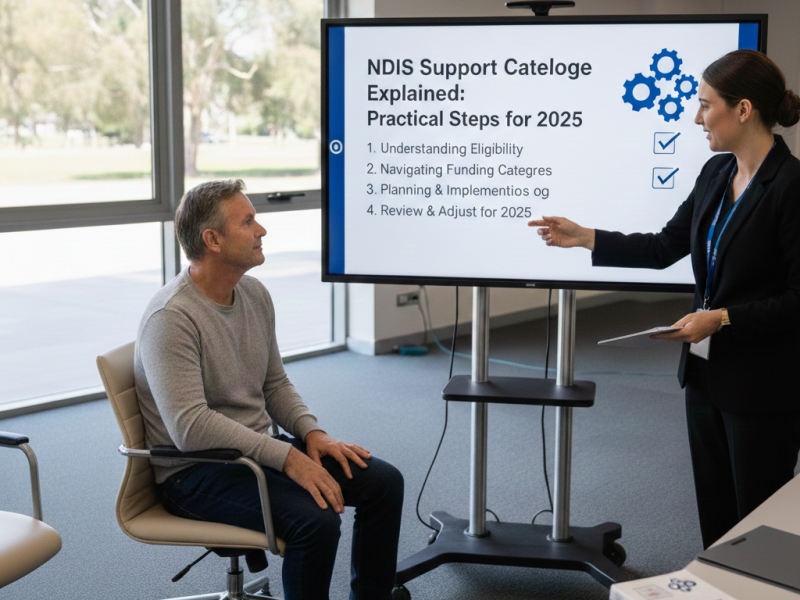


This blog explains the current National Disability Insurance Scheme (NDIS) pricing changes for Group-Based Supports and what it means for Registered Providers and Participants. Group-Based Supports pricing sits within the NDIS Pricing Arrangements and Price Limits (PAPL), which explains how price controls work and what Providers can and cannot claim under the Scheme.
Claiming for Group-Based Supports
When claiming for Group-Based Supports (see page 32 of the PAPL 2025-26 v.1.1 effective 24 November 2025) delivered to a group of Participants, the price limit for each Participant is the relevant hourly price limit divided by the number of people in the group. The Provider then submits a separate claim for each Participant for the total duration of the support.
- The Provider may only claim for reasonable and necessary supports relating to the Participant’s disability needs.
- In group sessions, the Provider may claim more than one worker against the Participant’s plan only when each worker directly supported that Participant for the time claimed.
This change is complemented by the unbundling of claimable elements. Providers can separately claim Non-Face-to-Face (NF2F) Support Provision, Provider Travel, Short Notice Cancellations, and Centre Capital Costs when a group support is delivered in a centre.
Want to Attract More NDIS Clients?
Get expert advice on how to market your services, connect with clients, and grow your practice.
Programs of Support
Programs of Support (POS) allow Participants and Providers to agree to a program of up to six months aimed at a specified outcome across categories such as Assistance with Social, Economic and Community Participation, Supported Independent Living, and Capacity Building. Under a POS, Providers may claim for Participants who agreed to attend as if they attended, provided the Provider had capacity to deliver the session.
- Participants must be able to exit without cost on no more than two weeks’ notice and supports under a POS are not subject to short-notice cancellation rules.
Group and Centre-Based Activities
Group and Centre Based Activities are offered in two streams, Standard and High Intensity. Price limits vary by as shown in the support tables for both streams on pages 67-68 of the PAPL 2025-26 v.1.1 effective 24 November 2025. Group and Centre Based Activities can be delivered to an individual Participant or to a group of Participants.
- When supports are delivered to a group of NDIS Participants, the price limit for each Participant is the table price divided by the number of people in the group, with a separate claim made for each Participant for the total time of the support.
- For both streams, NDIS group activities pricing allows separate claims for Non-Face-to-Face Support Provision, Provider Travel and Short Notice Cancellation 7 days.
- Providers can also claim specific extras including Provider Travel – Non-Labour Costs, Activity Based Transport – Social, Economic and Community Participation and Centre Capital Costs when the group session is delivered in a centre.
Impacts of Changes
Participants
NDIS Participants who use centre or group-based supports may notice changes to how budgets are drawn down for each session because NDIS group activities pricing now applies a group rate divided by the number of attendees, with separate line items for Non-Face-to-Face supports, Provider travel, and Centre Capital Costs.
- Participants with higher or complex needs may see different staffing ratios or Programs of Support that better match their goals and required intensity, while still meeting the reasonable and necessary test.
Registered Providers:
Providers are directly impacted and will need to update rosters, timesheets, billing and reporting to use the group-billing model, apply the correct ratio for claims, and separate Non-Face-to-Face and Centre Capital Cost claims. Operational changes can include staff training, clearer attendance management, and updates to Service Agreements and Program of Support documents so rules on exits, reviews, and cancellations are transparent.
- Plan Managers and Support Coordinators: Plan Managers and Support Coordinators should understand the new NDIS group rates so they can help Participants plan effectively, reconcile separate claim types, and monitor utilisation to avoid budget surprises and maintain continuity of supports.
Overall, the change aims to provide transparent, nationally consistent NDIS group activities pricing while requiring some adjustments by Providers and planners to maintain quality and continuity of care.
Reasons for changes
The reforms aim to improve market efficiency, keep NDIS services financially sustainable, and enhance Participant choice and quality for group and centre-based supports. The updated NDIS group rates are designed to align pricing with the real cost of delivering group-based supports and to strengthen scheme sustainability.
- Under previous settings, varied costs were often bundled into per-Participant rates, which made it harder to recover legitimate expenses and to see what was being paid for.
- The new approach separates claimable components such as Non-Face-to-Face supports, Provider travel, and Centre Capital Costs, which improves transparency, supports efficient resource allocation, and gives Providers clearer levers to design quality group programs.
These changes also support workforce viability and fair remuneration settings so Providers can recruit and retain skilled staff and continue delivering services across metropolitan, regional, rural, and remote areas. Just as importantly, the model encourages participant-centred outcomes by enabling tailored Programs of Support, more flexible group design, and clearer links between the intensity of support, the staffing model, and the prices claimed.
Referrals Start With Reputation – We’ll Help You Build Both
From networking tips to service refinement, we guide NDIS providers toward lasting impact.
Conclusion
NDIS Group-Based Support Pricing is now aligned with how group and centre-based supports operate day to day. A shared group rate links what each Participant is charged to the size and duration of the session, while separate claims for Non-Face-to-Face activities, Provider Travel, Short Notice Cancellations and Centre Capital Costs make preparation and venue costs visible. Programs of Support create predictability by setting a planned series of sessions with clear exit rules, which helps Participants commit to goals and gives Registered Providers the capacity to roster and resource effectively.
In practice, the framework is most effective when documents and systems describe how the group rate is calculated, when separate line items will be used, and how Programs of Support are reviewed. Service Agreements, rosters, attendance records and billing that reflect these settings make claims easier to reconcile and keep utilisation aligned with Participant goals. Plan Managers and Support Coordinators contribute by explaining the claim types, tracking them across a plan, and helping budgets remain stable over the life of each program.
Frequently Asked Questions (FAQs)
1. How are NDIS Group Activities priced now?
NDIS Group Activities are priced by dividing by the number of attendees and a separate claim is made for each Participant for the total time of the support. Providers can also claim distinct items for Non-Face-to-Face Supports, Provider Travel, Short Notice Cancellations and, when delivered in a centre, Centre Capital Costs.
2. What is a Program of Support and when should it be used?
A Program of Support (POS) is an agreed series of sessions, up to six months, aimed at a specific outcome. If the Provider had capacity to deliver a scheduled session, they may claim for Participants who agreed to attend as though they attended. Participants must be able to exit with no more than two weeks’ notice. Use a POS when attendance is expected to be regular and the program has clear goals that benefit from a planned block of sessions.
3. What changed from the old pricing model?
The model moved from bundled, per-Participant rates to a group rate with unbundled claims for preparation, travel and centre costs. It also distinguishes between Standard and High Intensity Group and Centre Based Activities and applies price limits that vary by time of day and day of week. The result is clearer links between staffing, intensity and the amounts claimed.
4. Who is impacted and what should they do next?
NDIS Participants may see budgets drawn down differently per session and can use Programs of Support to lock in predictable schedules aligned to goals. Registered Providers should update billing systems, record Non-Face-to-Face time separately, and itemise Centre Capital Costs where relevant. Plan Managers and Support Coordinators should understand the new claim types, reconcile them accurately and help Participants plan to avoid budget surprises.
5. Where do I find the exact price limits for group and centre-based supports?
Refer to the PAPL 2025-26 v.1.1 effective 24 November 2025. The group-pricing rule is set out in the General Claiming Rules, and the tables for Group and Centre Based Activities, Standard and High Intensity, appear later in the document. Use the Support Catalogue for the current support item numbers and to check National, Remote and Very Remote limits.